





Balancing Learning and Fun Through Prototyping
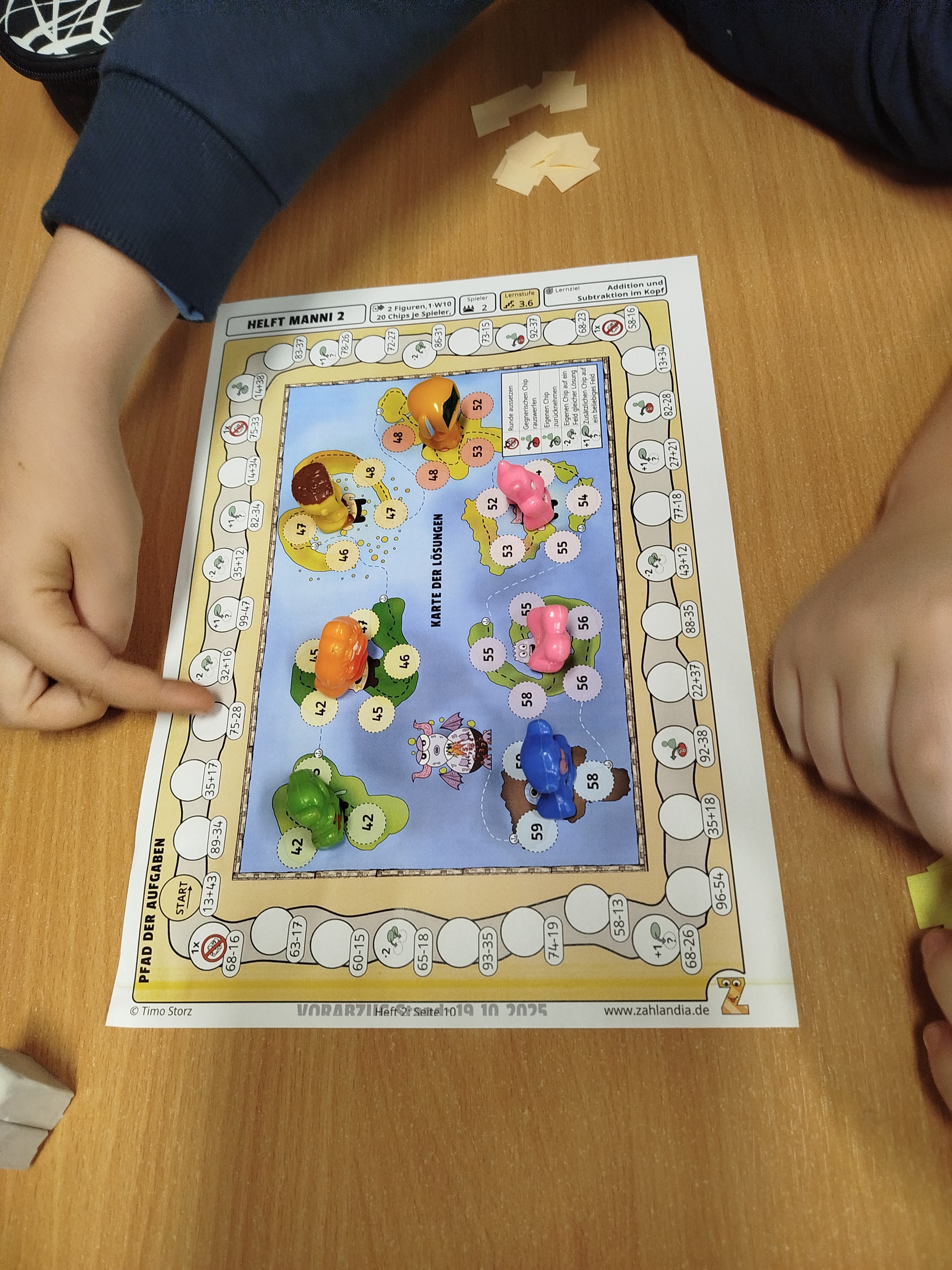
One of the most important stages in the development of Zahlandia is the prototyping process, where educational ideas are transformed into playable game experiences. During this phase, the project partners carefully evaluate how each game functions, ensuring that it not only supports mathematical learning but also provides an enjoyable and motivating experience for children.
 03/02/2026
 254
254


Balancing Learning and Fun Through Prototyping
One of the most important stages in the development of Zahlandia is the prototyping process, where educational ideas are transformed into playable game experiences. During this phase, the project partners carefully evaluate how each game functions, ensuring that it not only supports mathematical learning but also provides an enjoyable and motivating experience for children.
Creating an effective educational game requires finding the right balance between challenge and accessibility. If a game is too easy, learners may quickly lose interest. On the other hand, if it is too difficult or the mathematical tasks become overwhelming, children may become frustrated and disengage. For this reason we build prototypes and refine them to offer an appropriate level of difficulty that encourages learners to think, experiment, and gradually build confidence in their mathematical abilities.
The prototyping stage also focuses on the overall player experience. Elements such as the clarity of the rules, the pace of the gameplay, the level of interaction, and the rewards for progress are carefully considered. These aspects help create an environment where children remain curious, motivated, and eager to continue playing while naturally reinforcing mathematical concepts.
An engaging game is more than just entertaining: It encourages persistence and active participation. When children enjoy the learning process, they are more likely to remain focused, repeat activities, and practice mathematical skills without feeling that they are completing traditional exercises. This combination of learning and enjoyment lies at the heart of the Zahlandia approach.
Through continuous testing and refinement, the project partners are working to ensure that every game successfully combines educational objectives with engaging gameplay. The knowledge gained during the prototyping phase will contribute to the development of a high-quality digital application that enables children across Europe to strengthen their mathematical skills through interactive, game-based learning.